Phlebotomy
RoDina Williams DCLS, MPH, MLS(ASCP)CM
Director, Medical Laboratory Sciences
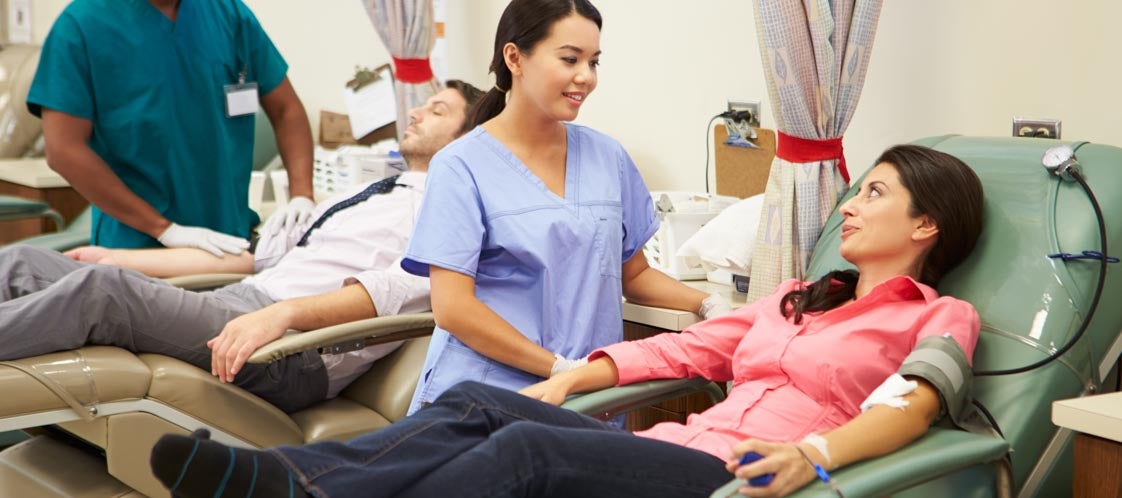 The Phlebotomy Program prepares students to collect high-quality blood specimens and support diagnostic testing services in a variety of healthcare settings. Students develop skills in venipuncture and capillary collection techniques while adhering to safety, infection control, and patient identification protocols.
Mission
The mission of the Medical Laboratory Sciences department (Phlebotomy, Medical Laboratory Assistant, and Medical Laboratory Technician programs) is to graduate competent and ethical laboratory professionals equipped with the foundational knowledge and technical skills required for immediate career entry. The program is dedicated to supporting the overarching mission of Malcolm X College by providing high-quality, rigorous health science education. We are committed to preparing students to demonstrate the precise clinical skills and professional behaviors essential to the modern diagnostic laboratory.
About
Phlebotomists are the front line of the laboratory, playing a critical role in the “pre-analytical” phase of testing. They ensure that every blood specimen is collected, labeled, and handled accurately before laboratory analysis begins. The phlebotomy program falls into the following key areas:
1. Healthcare Systems & Professional Role
Students demonstrate knowledge of the healthcare delivery system, including the role of the phlebotomist as a member of the interdisciplinary healthcare team. They apply appropriate medical terminology and understand laboratory organization and workflow.
2. Infection Control & Safety
Students apply infection control practices and safety procedures, including
standard precautions, aseptic technique, and prevention of healthcare-
associated infections. The program emphasizes compliance with OSHA
regulations, including bloodborne pathogen standards and proper handling of
biohazardous materials.
3. Anatomy, Physiology, and Specimen Integrity
Students demonstrate foundational knowledge of anatomy and physiology,
particularly the cardiovascular system, to support safe and effective specimen
collection. Emphasis is placed on maintaining specimen integrity throughout the
pre-analytical phase of testing.
4. Specimen Collection Procedures
Students perform venipuncture and capillary puncture using standard operating
procedures. They demonstrate proper patient identification, site selection,
specimen collection techniques, and awareness of complications to ensure high-
quality specimens for laboratory analysis.
5. Specimen Handling, Processing, and Transport
Students demonstrate understanding of test requisitioning, specimen labeling,
processing, storage, and transport requirements to ensure accurate and timely
laboratory results.
6. Quality Assurance and Compliance
Students apply principles of quality assurance and quality control in phlebotomy
practice, recognizing factors that may affect test results and taking appropriate
corrective action when needed.
7. Communication and Professionalism
Students demonstrate effective verbal and non-verbal communication skills,
maintain patient confidentiality in accordance with HIPAA regulations, and
interact professionally with patients and healthcare team members.
8. Clinical Competency and Experiential Learning
The program includes supervised clinical experiences that allow students to
apply knowledge and skills in real-world healthcare settings, ensuring readiness
for entry-level employment.
Program Approval
The Phlebotomy Program is approved by the Illinois Community College Board (ICCB) and the Higher Learning Commission (HLC).
In addition to institutional accreditation, the Phlebotomy program is approved by the National Phlebotomy Association (NPA).
National Phlebotomy Association
1901 Brightseat Rd.
Landover, MD 20785
Phone: (301)386-4200
Fax: (301) 386-4203
Website: nationalphlebotomy.org
Occupational Overview
Employment opportunities for phlebotomists are available in a variety of healthcare settings, including hospitals, medical centers, outpatient laboratories, physician offices, diagnostic and reference laboratories, and public health facilities.
Phlebotomists must be able to meet the physical demands of the role, including sitting and standing for extended periods, frequent walking, and repetitive reaching (including overhead and extended movements). Strong communication, auditory, and visual skills are essential. Attention to detail, organizational ability, and accurate documentation are critical to ensuring patient safety and specimen integrity. Individuals must also be able to lift, push, or pull up to 30 pounds.
Phlebotomists may be exposed to chemicals, biohazardous materials, blood and body fluids, infectious diseases, fumes, and noise. In addition, a phlebotomist:
• Performs venipuncture and capillary puncture using established safety protocols
and standard operating procedures
• Verifies patient identity and ensures accurate specimen labeling and
documentation to prevent identification errors
• Prepares, handles, and transports specimens in accordance with laboratory
quality and safety standards
• Utilizes electronic health records (EHR) and laboratory information systems (LIS)
for test order entry, specimen tracking, and data management
• Maintains phlebotomy equipment and ensures proper handling and storage of
collection supplies
• Assists with monitoring inventory and restocking phlebotomy supplies
• Adheres to standard precautions, infection control practices, and OSHA
guidelines for biohazard and sharps disposal
• Maintains a clean, organized, and safe patient care and specimen collection
Environment
• Supports departmental policies, procedures, and quality assurance initiatives to
promote continuous improvement
• Communicates effectively and professionally with patients, laboratory staff, and
other healthcare providers
Length of Course/Program Schedule
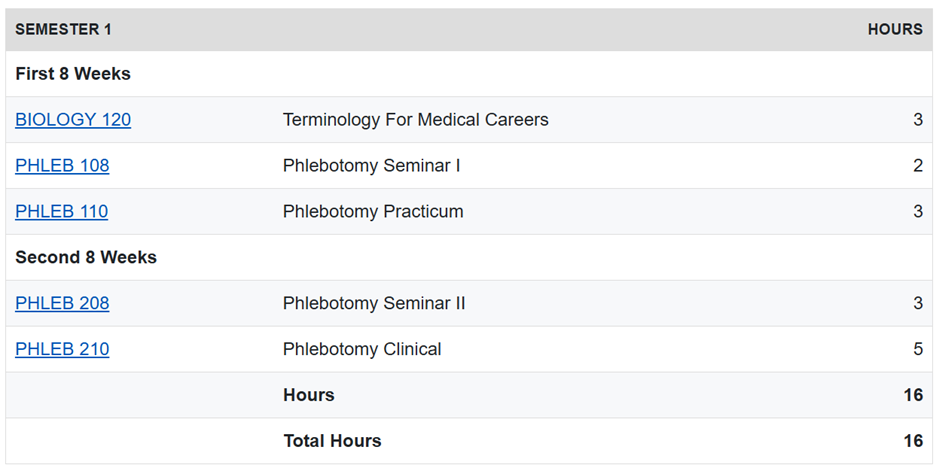
The Phlebotomy Program consists of a structured curriculum totaling 16 credit hours. The 16-week (one semester) program includes required coursework designed to build competency in laboratory techniques, specimen collection, and communication within healthcare environments.
Courses
PHLEB 108: Phlebotomy Seminar I
PHLEB 110: Phlebotomy Practicum
PHLEB 208: Phlebotomy Seminar II
PHLEB 210: Phlebotomy Clinical
Students must also demonstrate a strong knowledge of medical and anatomical terminology. To meet these criteria, students must complete:
BIO 120: Terminology for Medical Careers
Phlebotomy Clinical Externship
The Clinical Externship is a requirement of the Phlebotomy program at Malcolm X College. This immersive experience transitions you from the simulated campus lab into an actual clinical work environment at one of our partner healthcare affiliates. Under the supervision of clinical professionals, you will refine your technical skills and adapt to the pace of a functioning healthcare facility.
To accommodate the rigorous training required while maintaining academic balance, the clinical externship is structured as follows:
· Duration: 1-2 weeks, site dependent.
· Weekly Commitment: Monday – Friday, 8 hours per day, site dependent.
· Total Clinical Hours: 80 Hours.
Students must complete 100 unaided specimen collections or 80 hours of clinical experience to successfully meet the requirements of the clinical externship.
Frequency of Admission
Admission to the Phlebotomy Program is offered in the Fall and Spring semesters.
Applications for Fall admission will generally open in March.
Applications for Spring admission will generally open in October.
Phlebotomy Certification
Graduates of the Phlebotomy Program may become credentialed through a variety of agencies. Please see a short list of credentialing agencies below:
· National Healthcareer Association (NHA), Certified Phlebotomy Technician (CPT).
· National Phlebotomy Association (NPA), Certified Phlebotomist Technician (CPT)
· American Society for Clinical Pathology (ASCP), Phlebotomy Technician (PBT)
· American Medical Technologists (AMT), Registered Phlebotomy Technician (RPT)
Program Admission Requirements
Applicants must:
1. Be admitted to Malcolm X College
2. Be at least 18 years of age.
3. Be eligible to take English 96
4. Complete the Special Admissions Application for the Phlebotomy Program
5. Submit official/sealed high school transcript or GED certificate directly to Malcolm X College
a. High school diplomas will not be accepted
b. GED certificate must indicate date of completion
6. Submit official/sealed college transcripts from institutions outside of City Colleges of Chicago directly to Malcolm X College
a. All college transcripts from colleges/universities attended outside City Colleges of Chicago are required to be sent to Malcolm X College Office of Registrar Services or mxregistrar@ccc.edu from the specific college/university. We do not have access to transcripts submitted to other City Colleges of Chicago.
All students are required to undergo a criminal background check. Students with a positive background check that contains disqualifying convictions may be prohibited from being placed at a clinical site, sitting for certification examinations, and securing future employment. The program’s Work Based Learning Coordinator will provide instructions to obtain the criminal background check at the New Student Orientation session.
For additional information, please refer to Section 25 (225 ILCS 46/25) of the Health Care Worker Background Check Act.
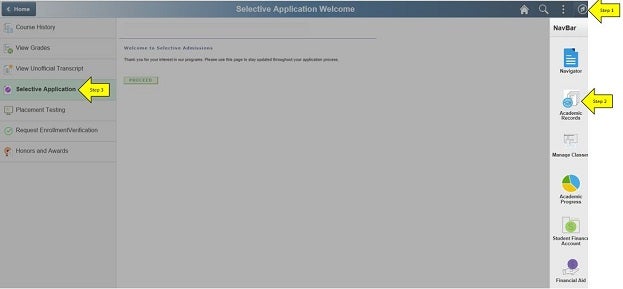
Submitting Application Within the Student Portal (my.ccc.edu)
- Under “My Academic Plan
- Within “Academic Planning
- Click “Selective Application”
Faculty and Staff
| Name | Phone | Office | |
| RoDina Williams- Health Science Director | (312) 850-7248 | rwilliams25@ccc.edu | 2103-K |
| Dr. Cynthia Funnye Doby – Co-Chair & Associate Professor | (312) 850- 7809 | cdoby@ccc.edu | |
| Tameka Jordan - Work Based Learning Coordinator | (312) 850-7313 | tjordan107@ccc.edu | |
| Janelle Bell – Adjunct Instructor | jbell35@ccc.edu | ||
| Indrajet Mody – Adjunct Instructor | imody@ccc.edu | ||
| Susan Rohde-Adjunct Instructor | srohde1@ccc.edu | ||
| Kahlilah Ricard – Adjunct Instructor | kricard1@ccc.edu | ||
| Brandin Burress – Adjunct Instructor | bburess1@ccc.edu | ||
| Latisha Martin-Adjunct Instructor | lmartin68@ccc.edu | ||
| LaShawn O’hara – Lab Coordinator | lohara@ccc.edu |